

Most transformations begin the same way: with hope, urgency, and a deck that promises to make the future arrive on schedule.
The CEO stands at the front of the room—sometimes literally, sometimes by force of gravity—and names the reasons change can’t wait. Margin compression. Customer expectations. Aging systems. Workforce constraints. External scrutiny. Competitors who seem to move faster and spend less time explaining themselves. Heads nod. Pens tap. Someone says, “We all agree.”
And for a moment, it feels true.
Then the diagnostic phase begins. Interviews. Workshops. Data pulls. Heat maps. Maturity models. A few strong “aha” moments. And then, almost imperceptibly, the transformation starts to drift—not because anyone is lazy or incompetent, but because analysis is comfortable. Analysis postpones conflict. It delays tradeoffs. It allows everyone to keep their favorite project and still claim commitment to change.
The organization becomes fluent in describing problems while remaining strangely reluctant to choose.
That is where most transformations die: not in the diagnostic, but in the handoff from knowing to doing.
Because a roadmap that actually executes is not a document. It is a contract—between strategy and operations, between leaders and reality, between what the organization wants and what it is finally willing to stop pretending it can continue doing.
The moment the wheels come off
There’s a predictable moment, usually after the third steering committee meeting, when the roadmap begins to swell.
Someone asks for an additional workstream “so we don’t miss anything.”
A stakeholder requests a parallel effort “to keep the team engaged.”
A department head insists their area be included “for completeness.”
A well-meaning advisor says, “If we’re transforming, we should also…”
And like that, the plan becomes inclusive instead of executable.
The roadmap grows wider. The number of initiatives multiplies. The milestones look polished. The risk register becomes thick enough to serve as its own coffee table. Everyone can find a piece of themselves in the plan—because the plan has stopped forcing decisions.
This is the transformation paradox: the more comprehensive the roadmap, the less likely it is to run.
Execution requires something the organization is often hesitant to supply: subtraction.
What “good” looks like when you’re serious
A serious transformation has four traits—simple to say, difficult to live:
- A diagnostic that ends in decisions, not observations.
- Tradeoffs written down, in plain language.
- Named owners with real authority.
- Metrics that prove outcomes, not activity.
Everything else—workshops, frameworks, “alignment”—is supportive at best, distracting at worst.
If your roadmap doesn’t force these four, it will become a story you tell rather than a plan you run.
Diagnostics: stop describing the weather—find the constraint
Most diagnostics read like a well-crafted encyclopedia entry on organizational pain. They are thorough. They are intelligent. They are also nearly impossible to execute against.
The diagnostic that leads to action does not ask, “What’s wrong?”
It asks, “What is the constraint?”
- Where does the organization consistently lose time, margin, quality, safety, trust, or cash?
- Which bottleneck shapes everything else?
- What decision are you avoiding because it is politically expensive or operationally disruptive?
- Which part of the system—people, process, technology, supplier, governance—limits throughput?
A good diagnostic is not a museum of problems. It is a spotlight.
And it should end with something brutally compact: a top-five list that could fit on one page. Not because the world is simple, but because leadership must choose where to apply force first.
Tradeoffs: make the “no” visible
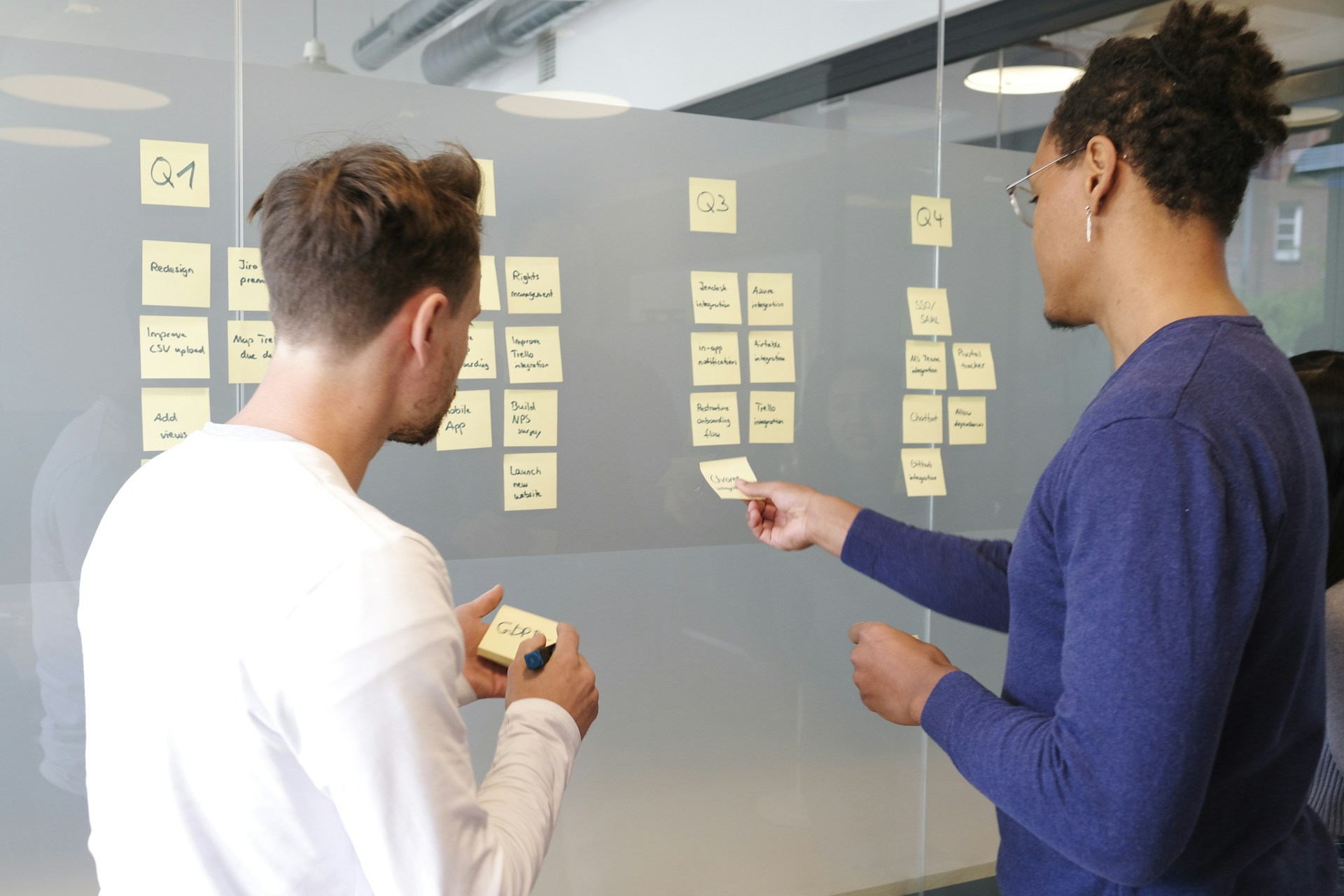
Transformation is often presented as addition: new tools, new processes, new structures, new capabilities.
In reality, transformation begins with a disciplined “no.”
- You stop work that consumes capacity and returns little value.
- You reduce exceptions that have quietly become policy.
- You end side projects that exist because nobody wants to disappoint the person who sponsors them.
- You postpone the “nice-to-have” so the “must-have” can actually land.
The most important sentence in any executable roadmap is not “Here is what we will do.”
It is: “Here is what we will stop.”
Because if you don’t choose your tradeoffs, your tradeoffs will choose you—usually in the middle of a crisis, when you are least prepared to explain them.
Owners: one throat to choke, one hand to shake
Organizations love shared accountability because it feels collegial. But shared accountability is often just shared ambiguity.
A roadmap executes when every major outcome has:
- one accountable owner,
- clear authority to make cross-functional decisions,
- a defined escalation path for conflicts,
- and a cadence where owners report progress against outcomes—not busyness.
Committees can advise.
Working groups can contribute.
But ownership must be singular.
When ownership is singular, momentum becomes possible. When it is shared, momentum is negotiated.

Metrics: prove the change, don’t narrate it
The quickest way to erode confidence in a transformation is to celebrate activity.
Workshops held.
Training completed.
Software deployed.
Teams “aligned.”
None of that is an outcome.
Outcomes are harder and less romantic. They are measurable improvements in the operating system:
- cycle time down,
- defects down,
- safety incidents down,
- cash conversion improved,
- customer churn reduced,
- on-time delivery stabilized,
- audit findings eliminated.
An executable roadmap uses metrics the way a pilot uses instruments: not as decoration, but as the only trustworthy feedback when visibility drops.
And visibility will drop—because every transformation enters a phase where enthusiasm fades and the real work begins.

Sequence: stabilize, rebuild, then scale
Even when you get diagnostics, tradeoffs, owners, and metrics right, transformations still fail if the sequence is wrong.
Many organizations try to “strategize” while operations are drowning. They attempt to redesign the airplane while it is in turbulence.
The roadmap that executes respects the physics of capacity:
First: Stabilize (0–30 days).
Reduce noise. Stop the low-value work. Protect customers. Create breathing room. Establish decision rights. Build a single source of truth for metrics.
Then: Rebuild the core (31–90 days).
Fix the constraint. Redesign the workflow at the bottleneck. Remove approvals that don’t reduce risk. Standardize what must be consistent. Train, document, and tighten controls.
Then: Scale and institutionalize (90–180+ days).
Expand the proven model to adjacent workflows. Formalize policy and training. Embed scorecards into operating reviews. Make the gains durable.
This sequence is not glamorous. It is effective.
And effectiveness is what executives ultimately need—especially when stakeholders, regulators, customers, and employees are watching.
The CEO’s execution spine: cadence beats charisma
A transformation doesn’t sustain itself on a launch speech. It sustains itself on rhythm.
A simple cadence is often enough:
- Weekly: execution review with owners—decisions, blockers, commitments.
- Monthly: outcomes review—scorecards, corrective actions, resource shifts.
- Quarterly: strategy and tradeoff review—what stops, what starts, what changes now.
The roadmap sets intent. Cadence enforces reality.
Without cadence, drift returns. With cadence, the organization learns to move again.
The questions that keep you honest
Before you publish your roadmap—before you announce it, brand it, or roll it out in town halls—ask the questions that expose weakness early:
- What must be measurably better in 90 days—or this plan is wrong?
- What are the three tradeoffs we’re willing to defend publicly?
- Who is accountable for each outcome—and what authority do they have?
- Where could this fail—cash strain, customer disruption, compliance risk, attrition—and what are the guardrails?
- What is the baseline for each metric, and will the definitions remain stable?
- What, specifically, are we stopping to create capacity?
If you can answer these plainly, you are ready to execute.
If you can’t, the organization will discover the answers later—at a higher cost.
Closing thought
Transformation is not a speech. It is not a deck. It is not a logo on a slide.
It is the discipline of choosing—then building a plan that can withstand fatigue, conflict, and scrutiny.
If you want a roadmap that actually runs, reduce your diagnostic to constraints. Make tradeoffs visible. Assign owners with authority. Measure outcomes a skeptic would respect. Then sequence the work so the organization can absorb it.
That is what “good” looks like.
And good is rare—because it requires the one thing organizations resist most: the courage to simplify.